
By Jill Corradini, MCD, CCC-SLP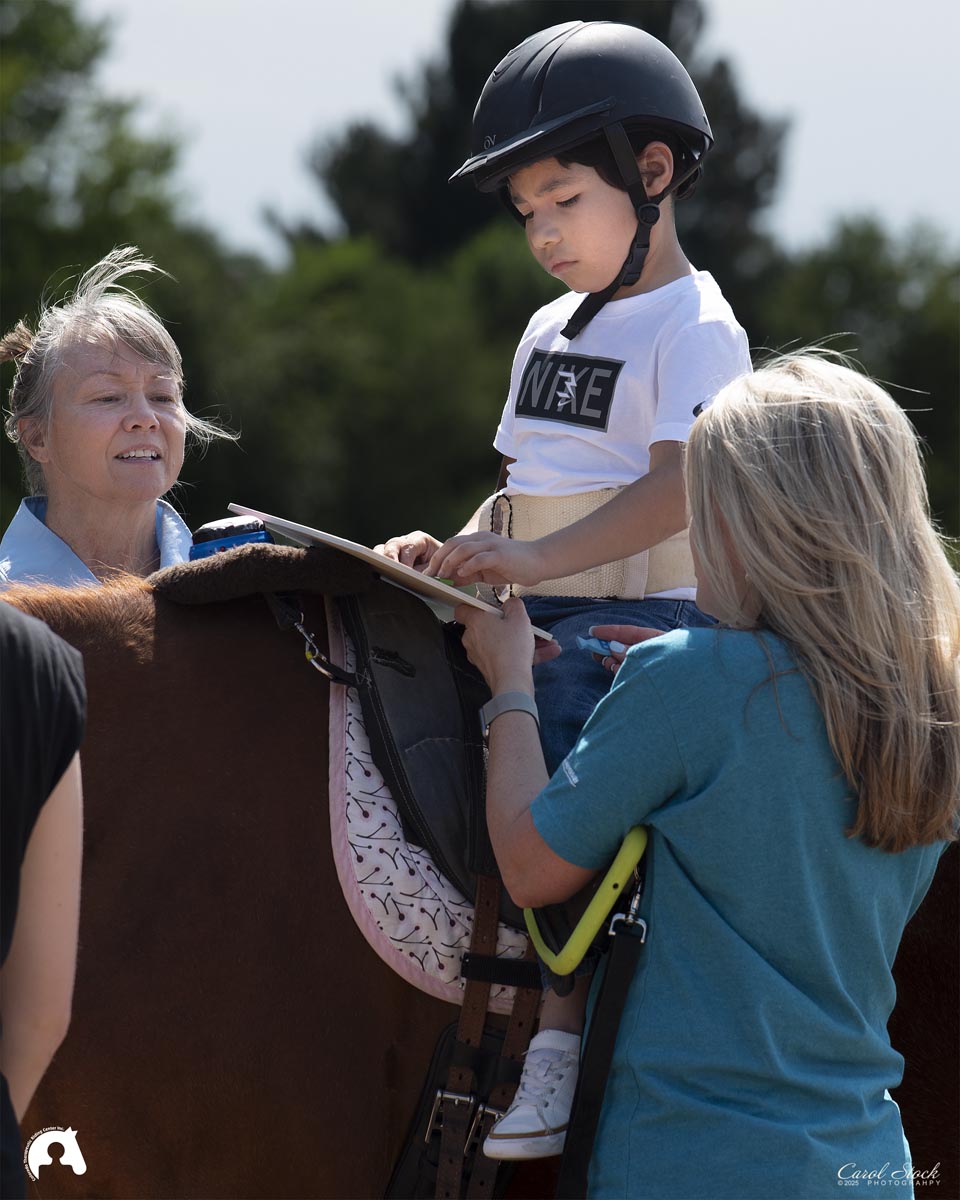
I have been riding off and on since I was 12 years old. However, it wasn’t until I visited the
Colorado Therapeutic Riding Center to watch one of my clients in her occupational therapy
session that I realized the significant effect a horse’s movement has on the entire body.
Fascinated, I decided to learn more. I completed intensive coursework through the American
Hippotherapy Association (AHA) and discovered how to integrate my passion for horses with
my work as a speech-language pathologist.
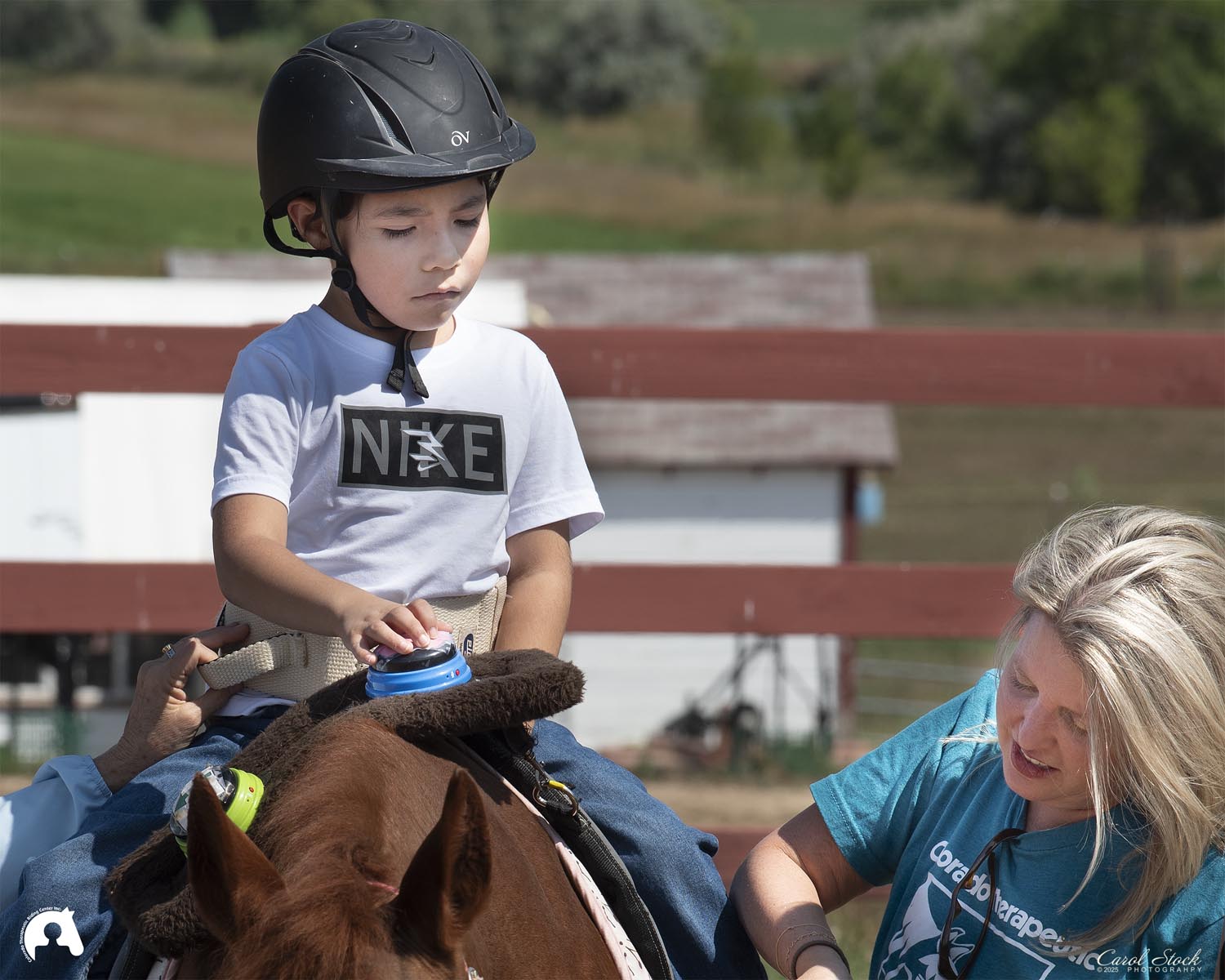
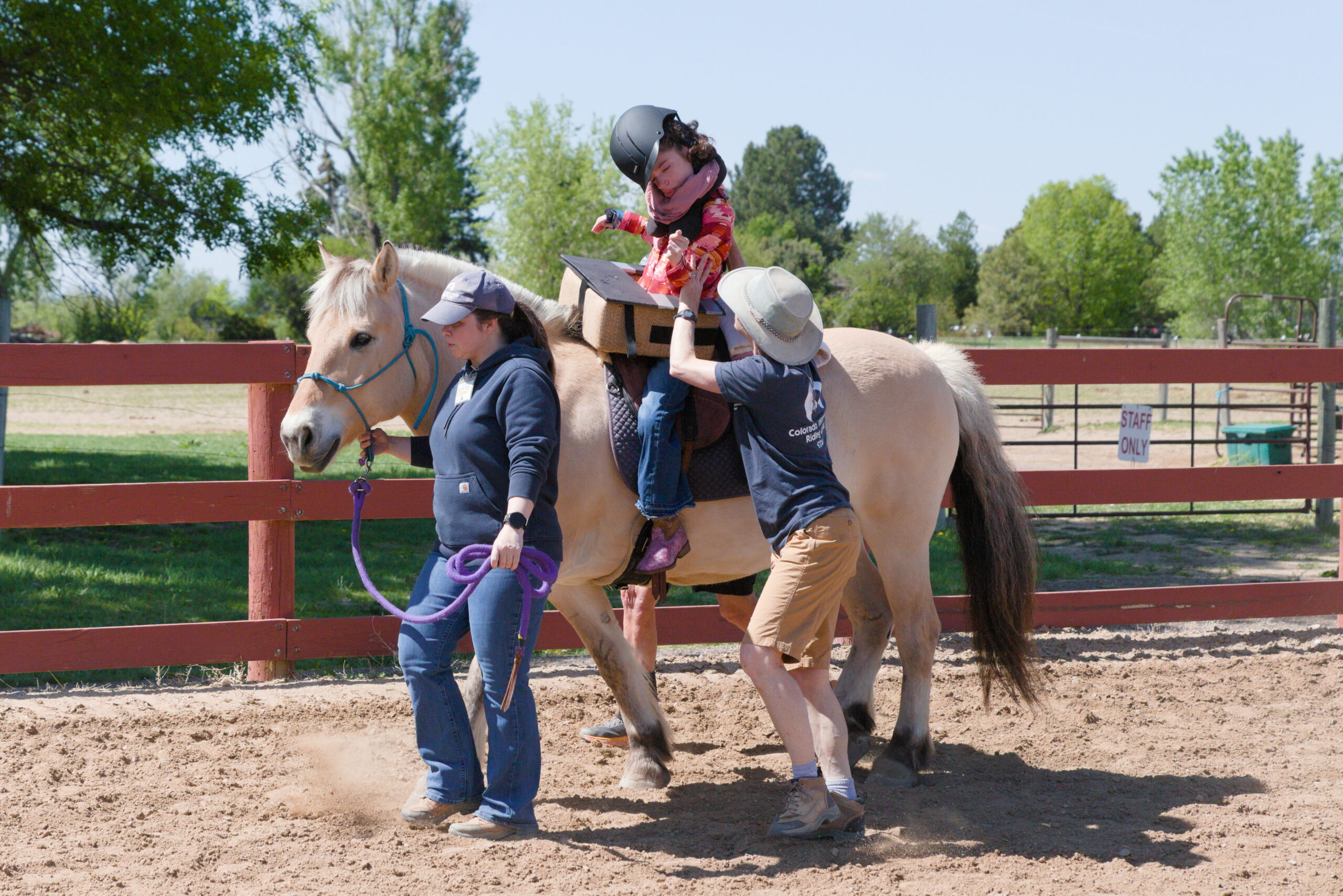
One might wonder how a horse’s movement supports speech and language development. I used to wonder the same thing! A powerful fact reported by the AHA explains the core mechanics: “The horse’s movement provides a repetitive, predictable, and symmetrical dynamic surface on which the patient can develop and practice functional postural control and balance.”
During a typical 30-minute treatment, a horse takes an average of 2,500 to 3,000 steps. This means a participant receives 83 to 100 impulses per minute, totaling up to 3,000 sensory inputs per session. These inputs directly stimulate vital neural pathways throughout the central nervous system.
Here is a closer look at the strong connection between equine movement and communication
development:
Postural Support for Voice and Breath: Speech and language are high-level cortical systems. Cognition, voice, oral-motor control, and language skills all depend heavily on the postural alignment of the head, neck, and trunk. Equine movement normalizes muscle
tone, stabilizes the pelvis, and strengthens respiratory function. The better a client’spostural support, the more their airway stays open, and their diaphragm expands. This
improved breath support lets individuals sustain phonation and produce longer sentences with less physical effort and fatigue.
o Builds core strength: Riding strengthens the posture and torso muscles required to
project the voice.
Timing, Rhythm, and Neurological Mapping: Effective communication requires incredible timing and rhythmicity. The steady, predictable cadence of the horse’s stride
supports a complex network of neurologic pathways through the central nervous system
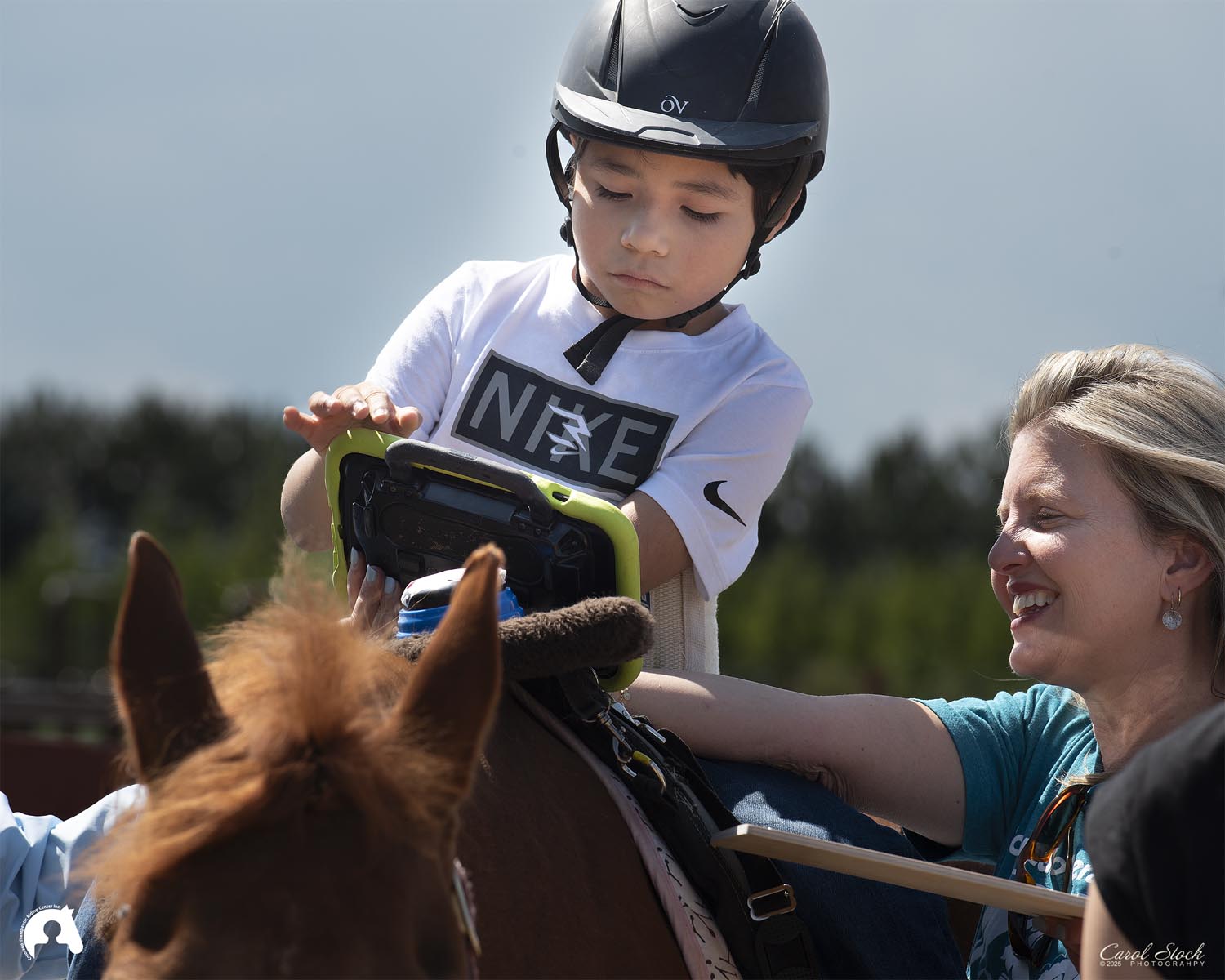 while softly stimulating the vagus nerve to promote safety and calmness.
o Calms sensory systems: Vestibular and touch feedback reduces sensory overload,
making it easier to focus on language.
o Enhances motor planning: Rhythmic movement trains the brain to coordinatespeech muscles more effectively in conditions like apraxia.
Sensory Integration and Emotional Regulation: Equine movement provides highly
organized, multi-sensory input across multiple bodily systems simultaneously. This
intensive, rhythmic input organizes the nervous system, helping clients achieve the
optimal state of self-regulation and functional arousal required for meaningful human
interaction.
o Boosts low motivation: The excitement of riding pushes kids to use functional
words such as “go” and “whoa.”
o Lowers communication anxiety: An outdoor, animal-centered environment feels
like play rather than a stressful clinic session.
o Teaches functional vocabulary: Being around horses, tack, and other people at the
barn provides real-world practice with spatial concepts, body parts, and action
words.
o Improves social skills: Interacting with the horse, volunteers, and therapists builds
confidence in practical, everyday conversation. Some clients say their first word
on a horse. The clients are motivated by the horses.
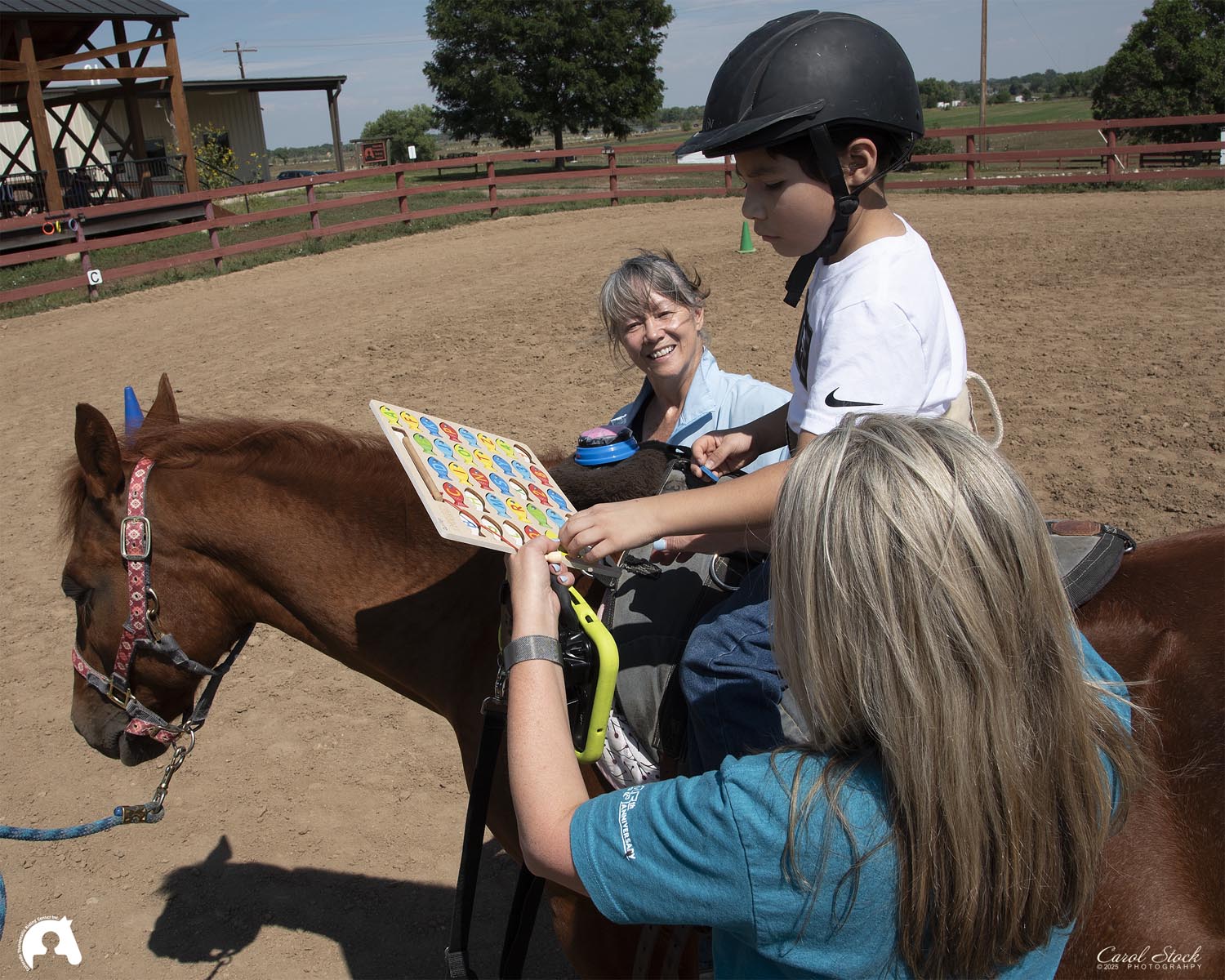
When the horse’s rhythm organizes a client’s brain and body, we see a dramatic shift in therapy:
attention spans lengthen, focus sharpens, and verbal output increases. We aren’t just riding
horses—we are using a dynamic neurological platform to unlock a client’s full potential in
expressive/receptive/social language skills!

Leave A Comment
You must be logged in to post a comment.